
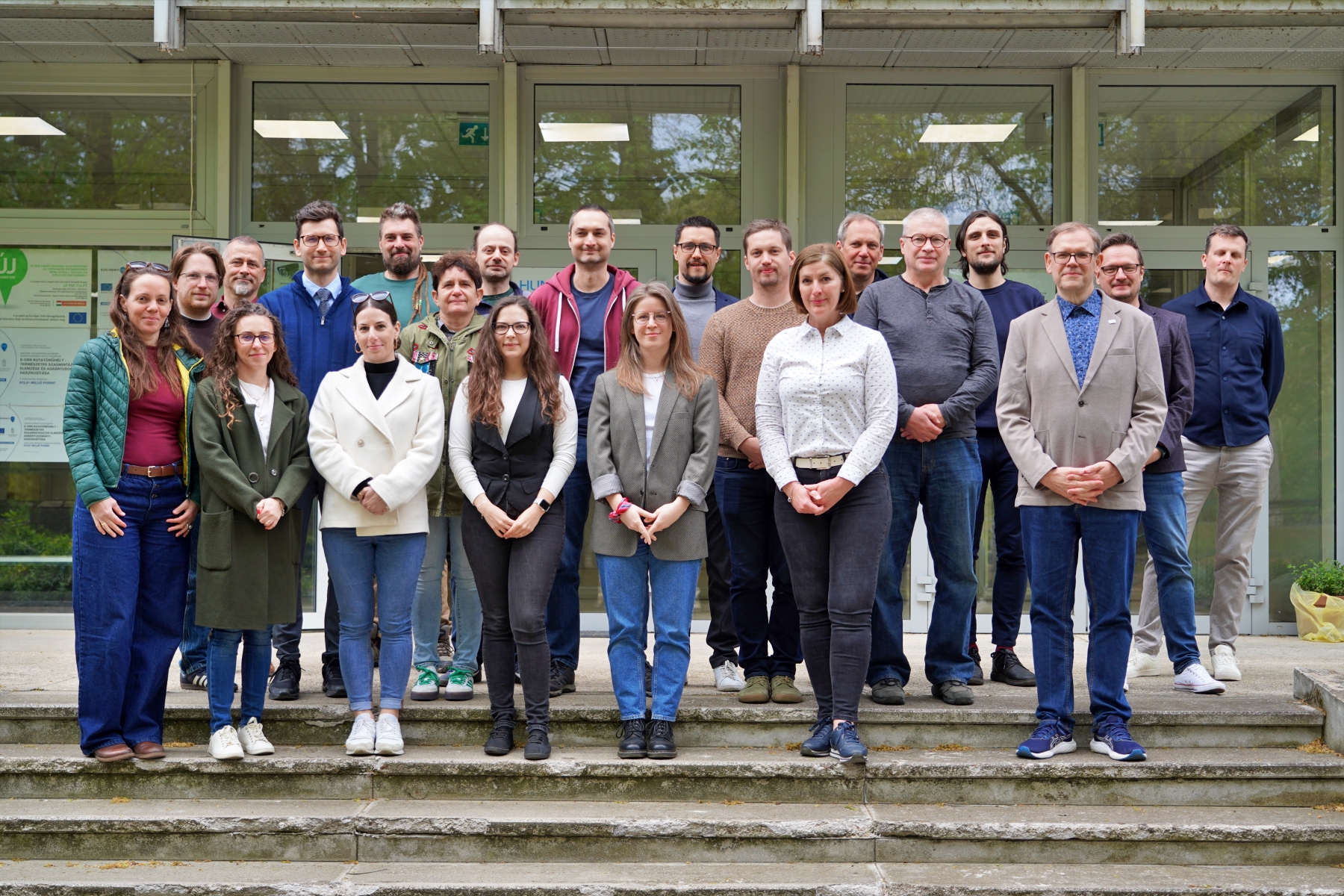
Hack My Field at ATK: real research problems and artificial intelligence at one table
At the first Hack My Field event, at the Centre for Agricultural Research, researchers and AI experts worked together on five research problems. The results included a working decision support prototype, data analysis supporting a publication and several new research directions.
At the first event of a new programme by the HUN-REN AI Service Centre (AISC), researchers and AI experts worked together on five research problems. The results included a working decision support prototype, data analysis supporting a publication and several new research directions.
Spitkó Tamás, head of ATK's Maize Breeding Department and senior research fellow, expected to learn about new ideas and methods for applying artificial intelligence. What he did not expect was to go home at the end of the day with a working prototype. That sums up the experience of the first Hack My Field event well.
Hack My Field is a new initiative at HUN-REN that explores what can be achieved when researchers and experts from the HUN-REN AI Service Centre work together on real research problems during an intensive working day. The first event was hosted by the Centre for Agricultural Research (ATK), where five different research challenges were tackled, from plant breeding through genomics to biological signal processing.
The format
Hack My Field started from a simple question: can real progress be made on research problems that have been part of a researcher's work for months or even years, if AI tools and expertise are applied in a targeted way? The programme aims to bring what AI can offer closer to researchers' everyday challenges. Experts from the HUN-REN AI Service Centre therefore visit institutes and work with researchers who have signed up in advance, in an intensive one-day sprint, directly on problems they face in their own research.
The goal is not to find final answers to every question in a single day. Rather, it is to find out where AI can offer a new approach, a faster route or even an entirely new solution to a given research challenge.
What used to take hours now takes minutes
At the centre of Spitkó Tamás's maize breeding work is a decision with direct economic and social significance: at the end of a given year, which hybrid candidates should be submitted for official state variety testing? A wrong decision can mean unnecessary costs, while a good one can contribute to a successful hybrid that goes into cultivation.
These decisions are based on performance data for thousands of hybrids from different sites and trials. The data had accumulated over years, but was available mainly in complex Excel spreadsheets. Although all the necessary information was there, answering individual questions often required manual filtering, cross-referencing and considerable data processing.
The aim of the joint work at Hack My Field was to build a decision support prototype from the existing data that could directly help the breeding process. The first step was to process the data in a structured way, on which a new database and a web interface were then built.
The resulting prototype lets the researcher ask questions about the data in natural language and receive the results in visual form, together with expert explanations. The system can compare different hybrids, produce rankings, and filter and analyse data by criteria that previously required a lot of manual work.
The development was not just about speeding up existing workflows. Another aim was to reveal connections in the data that are harder to discover with traditional analysis methods.
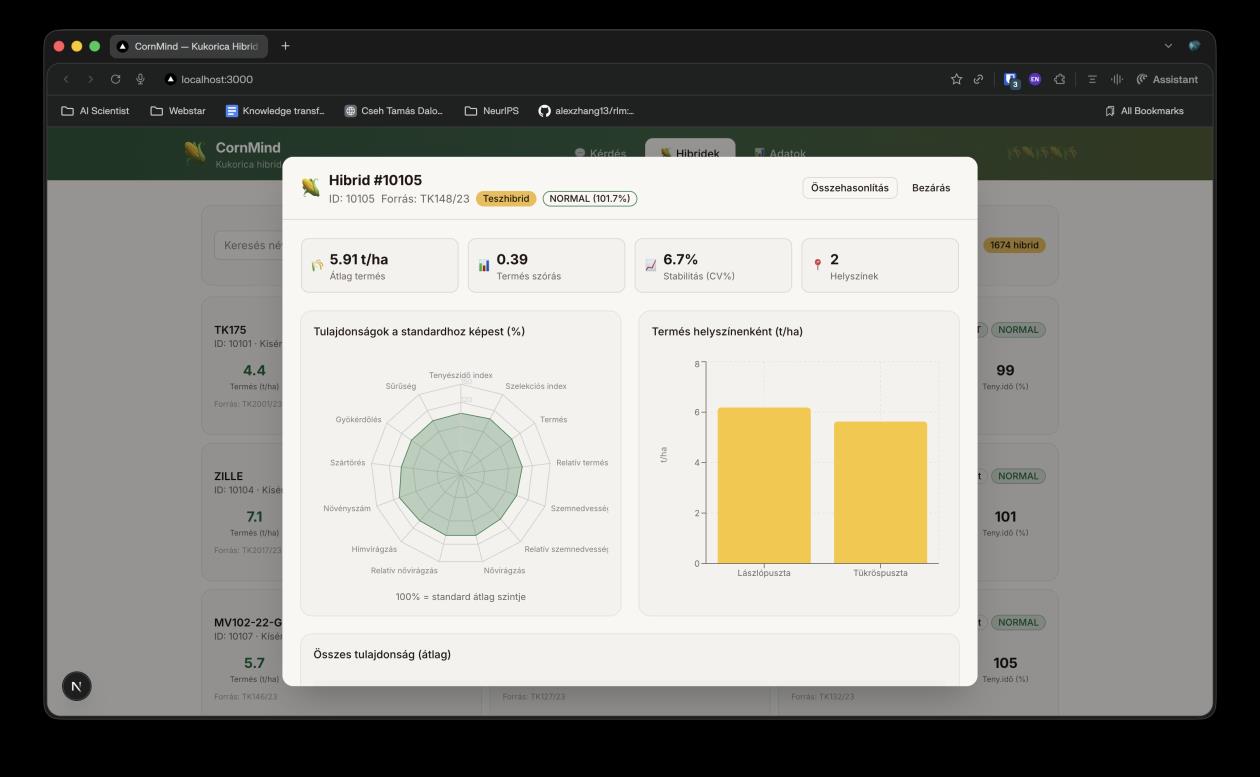
By the end of the day, the result was not only a working prototype but also a new way of putting research data accumulated over many years to work in decision-making.
'I imagined there would be training, a talk, and that I would get a bit more insight into how AI works. Instead, we sat down, discussed the problems in detail, and by the end of the day the software we had talked about was ready. It was much more than I expected,' said Spitkó Tamás.
ATK's wheat breeding programme had previously invested significant resources in building a complex database system (Breeder). No such infrastructure had yet been available in this form for maize breeding. One of the key lessons of Hack My Field was precisely that, with the help of AI, the path that once required long development processes can in some cases be shortened considerably. With further development, the prototype could become a decision support tool that helps breeders interpret the available data and select hybrid candidates in future.
Development continuing after the sprint
During the day, participants also worked on other research problems, including biological clustering of network graphs, processing GC-MS chromatography data and analysing electrophysiological signals. In several of these cases, the joint work mainly identified new directions, methodological ideas and further development opportunities along which the research can continue.
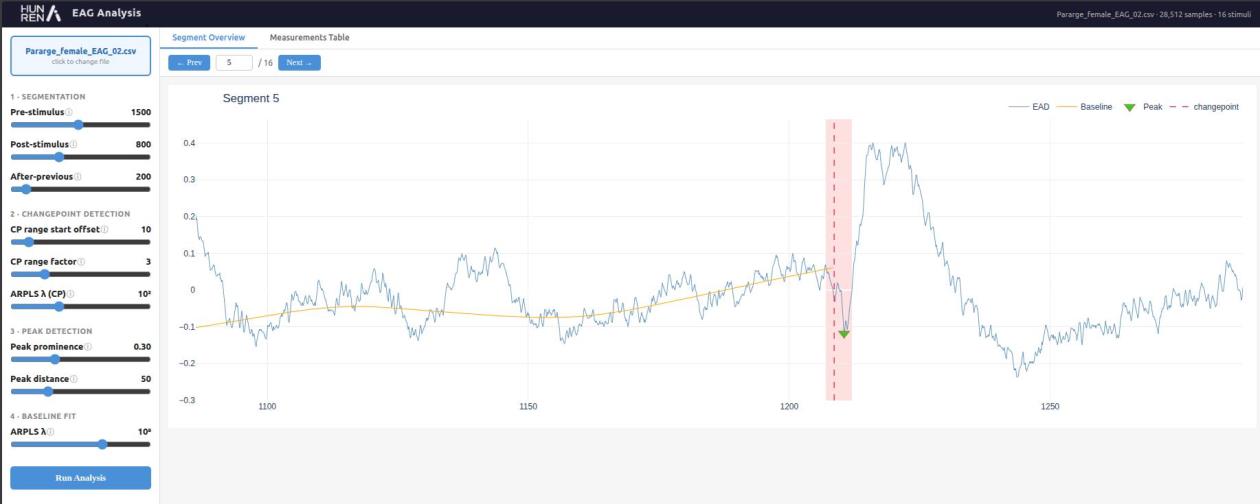
In electrophysiological signal processing, however, the work started at Hack My Field continued to develop after the event. Szabó Gergő, a member of AISC, turned the prototype built on the day into a browser-based application that automatically detects the electrical responses measured on insect antennae and helps researchers evaluate the measurements. The tool has since been handed over to the researchers, and early feedback shows that it speeds up exactly the manual analysis process that used to take the most time.
Beyond solving problems
The day was not only about the research sprints. In parallel, discussions took place with data stewards from ATK and other institutes, based on the recognition that AI-based research support and the careful management of research data are closely linked. AISC's work relies to a large extent on the data infrastructures that data stewards have built up over years, while the possibilities of AI can create new motivation for managing data in a structured and reusable way. Based on this experience, the two fields will need to work even more closely together in future.
As part of the programme, structured interviews were also conducted with several researchers. The aim was to better understand how researchers relate to artificial intelligence, what experience they have had with it, and in which areas they see real opportunities. The insights gained feed directly into the development of the HUN-REN AI Service Centre's services, whether the Agentic Discovery Platform (ADP), the training programmes or future research support initiatives.
The event at ATK was also the first live test of the Hack My Field format. On the day, not only was progress made on specific research problems, but it also became clear that the model could work at other institutes and in other scientific fields. Based on this experience, the programme will continue at further HUN-REN institutes.
Perhaps this was the most important lesson of the day: the biggest obstacle to applying artificial intelligence is often not a lack of technology, but the moment when a research problem and a possible solution meet for the first time. Hack My Field aims to create that meeting.